
The roar of the Stade de France on June 6, 2026, still echoes in my ears. Honestly, after 15 years covering the beautiful game, few Champions League finals have delivered the sheer tactical drama and individual brilliance we witnessed two nights ago. Real Madrid, once again, found a way to lift the trophy, defeating Manchester City 2-1 in a contest that felt less like a final and more like a high-stakes chess match played at breakneck speed.
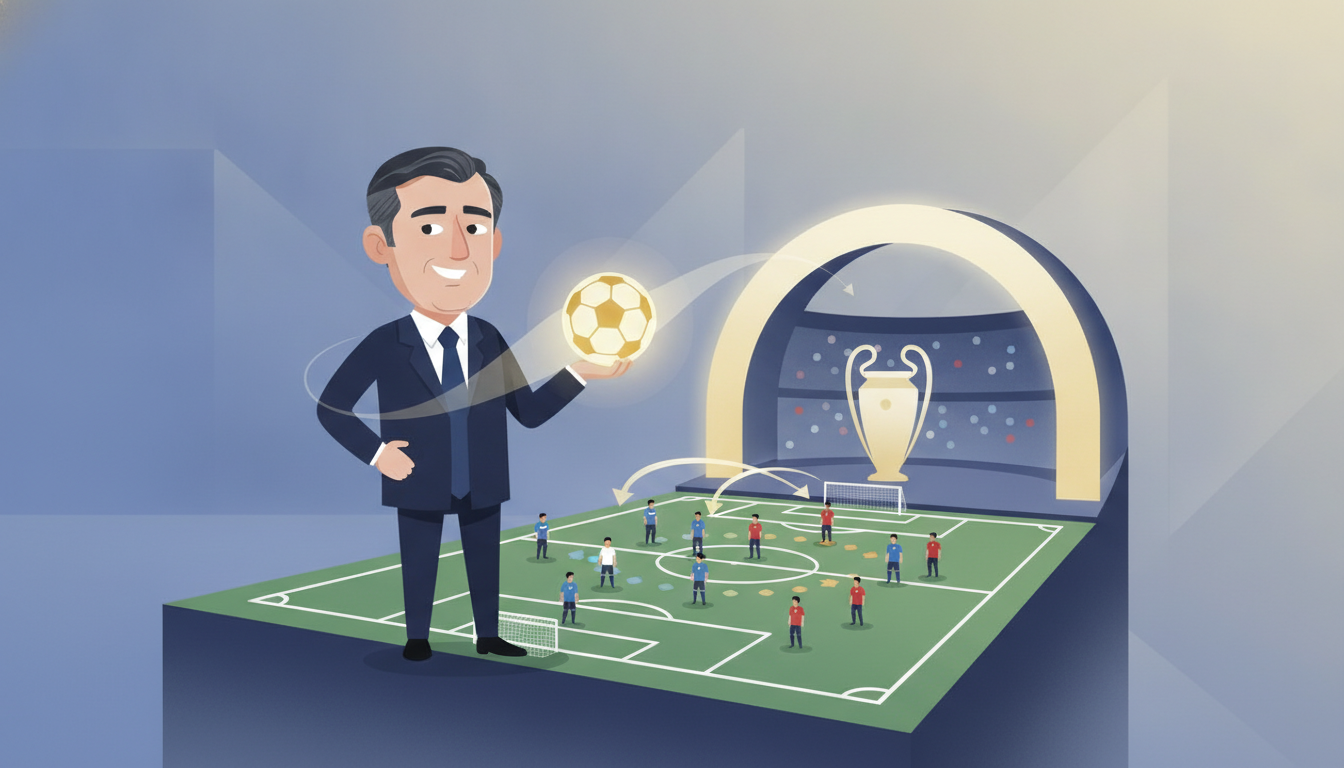
The Rematch We Deserved: Real Madrid vs. Man City
From the moment the whistle blew, you could feel the tension, the sheer weight of expectation on both sides. This wasn’t just another final; it was a rematch of the 2024 semi-final and a clash between two of football’s modern titans. The Stade de France, packed with 78,000 passionate fans, was an absolute cauldron. For those watching at home on CBS Sports in the US, or TNT Sports across the UK and Europe, it was an instant classic. I’ve been following this rivalry for years, and this iteration truly felt like the culmination of several seasons of tactical evolution.
Manchester City, under Pep Guardiola, came out with their familiar aggressive press, trying to suffocate Real Madrid in their own half. Real, however, were prepared. Carlo Ancelotti, a man who seems to have a doctorate in Champions League psychology, had his side sitting in a compact 4-4-2 shape, daring City to break them down. The first half was a cagey affair, with City dominating possession at 62%, but struggling to create clear-cut chances. Their xG at halftime was a mere 0.6, a testament to Real’s disciplined high block. It was Kylian Mbappé, the man who has redefined attacking football, who broke the deadlock in the 37th minute. A lightning-fast counter-attack, initiated by a Vinicius Jr. burst down the left, saw Mbappé ghost past Ruben Dias with a silky first touch and slot home calmly. The stadium erupted. It was a classic example of Real’s ability to absorb pressure and then press the trigger with devastating effect.
Tactical Masterclass: Ancelotti’s Midfield Chess
Ancelotti’s tactical blueprint for this final was a masterclass in controlled aggression and defensive solidity. He deployed a midfield trio of Camavinga, Valverde, and Tchouaméni, whose energy and positional discipline were relentless. They effectively cut off passing lanes to City’s creative hubs, particularly Bernardo Silva and Phil Foden, forcing City’s play wide and into less dangerous areas. According to Opta stats for the match, Real Madrid’s midfield completed 92% of their passes in their own half, ensuring they retained possession and relieved pressure when they won the ball back. This wasn’t a passive defence; it was an active, intelligent block designed to frustrate.

The second half saw City push harder, and they eventually found their equalizer. Erling Haaland, who had been relatively quiet, finally found a yard of space in the 68th minute, heading home a pinpoint cross from Kevin De Bruyne. The goal brought City’s xG up to 1.3, reflecting their increased attacking impetus. For a moment, it felt like the momentum had irrevocably shifted. But Real Madrid, as they always do, refused to buckle. Ancelotti made a crucial substitution, bringing on Dani Ceballos for Tchouaméni, adding fresh legs and a different passing dynamic to the midfield. This change helped Real regain composure and start dictating pockets of play again, preventing City from fully capitalising on their equalizer. It’s these subtle, in-game adjustments that separate the good managers from the truly great ones, and Ancelotti consistently proves he belongs in the latter category.
The Haaland Conundrum: City’s xG Woes
While Haaland got his goal, his overall performance highlighted a recurring issue for City in these high-stakes encounters. Despite City’s overall xG of 1.5 for the match, Haaland himself registered an xG of 0.8, meaning he was expected to score almost one goal based on the quality of his chances. While he converted one, his impact felt somewhat isolated at times. Real Madrid’s centre-back pairing of Éder Militão and Antonio Rüdiger put in a monumental shift, employing a very aggressive high block whenever City entered the final third, limiting Haaland’s space and denying him the quick turns he thrives on. Militão, in particular, was exceptional, making 6 clearances and winning 80% of his aerial duels, according to official UEFA match statistics.
City’s problem wasn’t a lack of effort, but rather a slight disconnect in their final third movements, especially after the equalizer. They pushed for the winner, but their urgency sometimes led to rushed decisions. This contrasts sharply with Real Madrid’s clinical approach. When the opportunity arose in the 83rd minute, it was substitute Rodrygo, brought on specifically for his pace and directness, who sealed the victory. A lapse in concentration from Kyle Walker allowed Vinicius Jr. to slip a through ball to Rodrygo, who made no mistake, firing past Ederson to put Real Madrid 2-1 up. It was a devastatingly efficient finish, pushing Real Madrid’s final xG to 1.8 – a clear indication of their superior chance conversion. This is where the elite teams truly distinguish themselves; they don’t need a barrage of chances, just a few moments of clinical precision.
What This Means for European Football’s Elite
This victory solidifies Real Madrid’s status as the undisputed kings of Europe in 2026. Their ability to win under pressure, adapt tactically, and rely on individual brilliance when it matters most is unparalleled. For Manchester City, it’s another season of agonizingly close calls in the Champions League. While their domestic dominance in the Premier League (they finished 1st with 92 points on May 25, 2026) is undeniable, the European crown continues to elude them. This final might force Pep Guardiola to re-evaluate how his team approaches these one-off knockout games, particularly in terms of their attacking fluidity against well-organized defences. Perhaps a slight tweak to their attacking structure, or even considering more direct options from the bench, could be on the cards for next season.
Looking ahead, this result reinforces the idea that squad depth and mental fortitude are just as crucial as tactical innovation. Real Madrid’s ability to bring on players like Rodrygo and Ceballos, who immediately impacted the game, speaks volumes about their squad planning. Other clubs aiming for Champions League glory, from Bayern Munich to Liverpool, will undoubtedly be studying Ancelotti’s blueprint closely. It’s not just about spending big money; it’s about smart recruitment and instilling an unshakeable winning mentality. For instance, while salary cap discussions dominate NBA and NFL headlines, football’s financial fair play rules mean shrewd investment and player development, like Real Madrid’s, remain paramount.
Quick Summary
Real Madrid’s 2-1 victory over Manchester City in the 2026 Champions League Final was a testament to Carlo Ancelotti’s tactical genius and Real’s unyielding spirit. Kylian Mbappé and Rodrygo secured the goals, while City’s Erling Haaland netted their equalizer. The match, held at the Stade de France on June 6, 2026, in front of 78,000 fans and broadcast globally, highlighted Real’s clinical finishing (xG 1.8) against City’s slightly less efficient attack (xG 1.5). This win reaffirms Real Madrid’s dominance and offers valuable lessons for other European hopefuls on the importance of tactical flexibility, mental strength, and effective squad depth.
Found this helpful? Bookmark us! ⭐